This is Article 5 of 9 in the Foundations Series.
← Back to the full series list
Ethics and morals form the practical foundation for discerning right from wrong and living consistently with truth. Ethics provides broader systems and principles for evaluating conduct, while morals are the personal, context specific rules derived from our deepest values. Building on prior articles in the Foundations series, this piece clarifies the distinction, explores core values, and equips you to apply them rigorously. Without strong ethics and morals, truth seeking collapses into convenience and self deception.
Why Ethics And Morals Matter Now More Than Ever
In an age of relativism, where my truth often trumps objective reality, clear ethical standards have never been more critical. Societies without shared moral anchors drift toward chaos. Strong ethics and morals are not optional, they are the operating system for individual character and civilized society.
This article draws from Christian principles such as the Ten Commandments, universal core values, and practical examples to build a coherent framework. It connects directly to previous Foundations articles on truth, deception, and critical thinking.
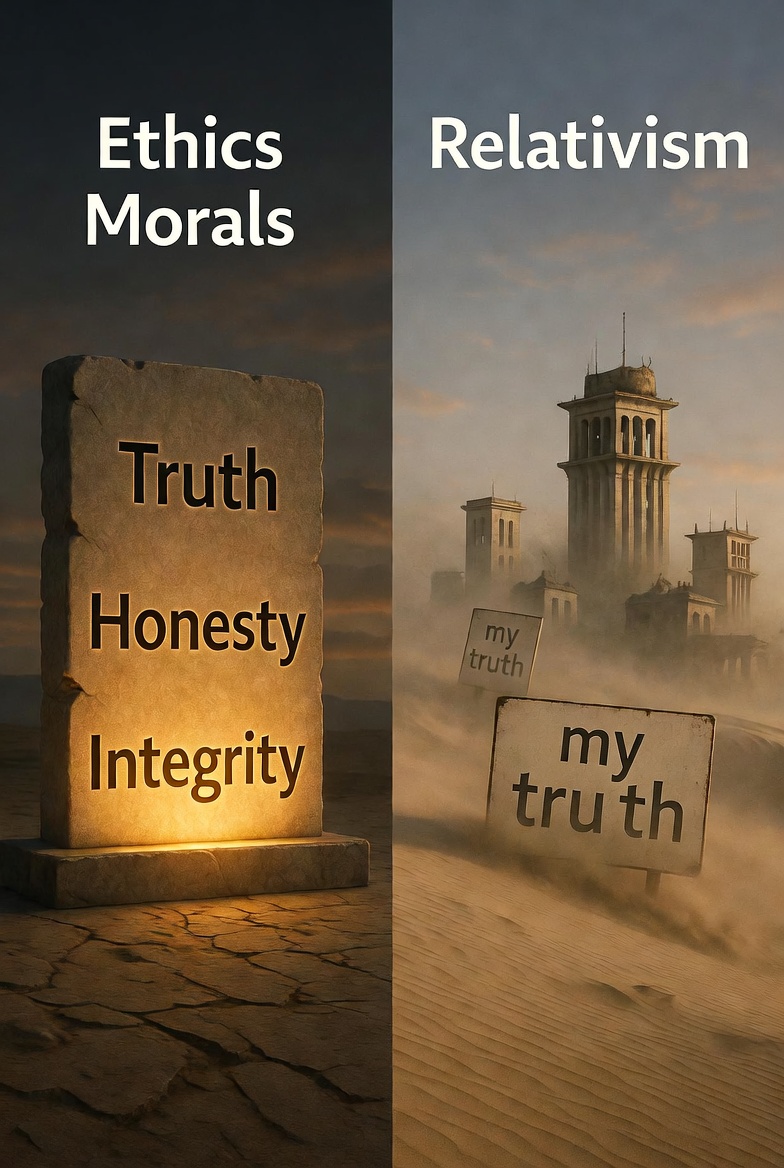
Definitions – Ethics Versus Morals
Ethics refers to a system or theory of moral principles that guide behavior. It is often more formal and philosophical, addressing right and wrong within specific domains such as business ethics or medical ethics.
Morals are the specific personal values and rules an individual holds about what is right and wrong. Morals tend to be more subjective and context driven, shaped by upbringing, culture, and conviction.
As Merriam Webster notes, morals often carry a sense of individual preference, while ethics leans toward universal fairness and responsibility. The two overlap heavily but are not identical. A person can hold strong personal morals yet face conflicting professional ethical codes.
Core Ethical Values
Universal core ethical values provide a practical foundation. The most widely recognized set includes six pillars:
Trustworthiness
Encompasses honesty, integrity, reliability, and loyalty.
- Honesty: Truthfulness in word and deed. Avoid lies, half truths, and deception.
- Integrity: Consistency between public and private behavior. Resist self interest, self deception, and self righteousness.
- Reliability: Keep commitments and avoid bad faith excuses.
- Loyalty: Protect legitimate interests while prioritizing higher duties such as truth over blind group loyalty.
Respect
Honoring the inherent dignity of all people through civility, tolerance, and avoidance of coercion.
Responsibility
Accountability for choices and actions. Includes pursuit of excellence, diligence, perseverance, and self restraint.
Fairness
Impartial processes, equity, and prompt correction of wrongs. Avoid favoritism or exploiting weakness.
Caring
Genuine concern for the welfare of others. The heart of ethical behavior.
Citizenship
Responsible participation in community, obeying laws while contributing more than one’s fair share.
Foundational Moral Principles From Religious And Philosophical Traditions
The Ten Commandments have profoundly influenced Western moral codes:
- I am the Lord your God…
- No other gods.
- Do not take God’s name in vain.
- Remember the Sabbath.
- Honor your parents.
- Do not murder.
- Do not commit adultery.
- Do not steal.
- Do not bear false witness.
- Do not covet.
Jesus summarized them as loving God fully and loving your neighbor as yourself. Complementary ideas include the Seven Deadly Sins (pride, greed, lust, envy, gluttony, wrath, sloth) and opposing virtues (humility, charity, chastity, gratitude, temperance, patience, diligence).
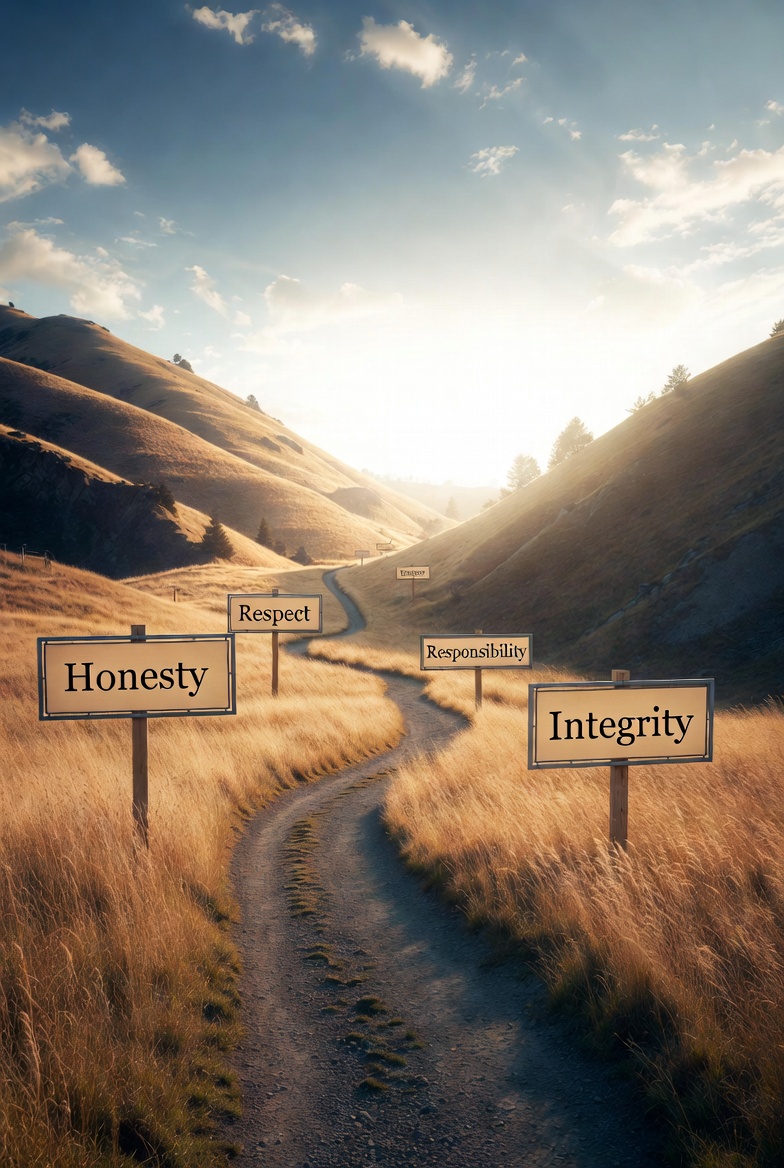
18 Important Moral Values (Practical Application)
Key moral values drawn from practical sources include:
Love The Lord… / Love Your Neighbor – Foundational priorities.
Honesty – Essential in all relationships and business.
Responsibility (“If you break it, you bought it”) – Own your actions.
Teamwork – Put collective success above selfishness.
Standing Up For The Vulnerable – Compassion in action.
Adaptability And Compromise – Wisdom to adjust when needed.
Kindness And Generosity – Give freely of time and resources.
Gratitude – Appreciate what you receive.
Self Control – Master impulses.
Self Respect – Maintain healthy boundaries.
Creativity – Express and encourage originality.
Self Motivation And Confidence – Drive your own progress.
Perseverance – Never give up on what matters.
Strategic Thinking – Plan several moves ahead.
Patience – Endure delays calmly.
Returning Favors – Reciprocate kindness.
Aspiration To Learn – Pursue continuous growth.
Challenges And Pitfalls
Living ethically remains difficult despite clear standards. Key obstacles include:
Conflicting Loyalties
Loyalty to family, employer, or group can clash with truth or justice. An employee discovering unethical practices faces pressure to stay silent. History shows such conflicts fueling major scandals and eroded trust.
Rationalization And Self Deception
Humans invent justifications such as everyone does it or the ends justify the means. Self deception allows breaking moral codes while maintaining a positive self image. This habit appears frequently in politics and personal relationships.
Cultural Relativism And Moral Drift
The idea that all values are equally valid undermines universal standards. Dishonesty in advertising or social media gets excused as marketing. Without firm anchors, societies drift toward convenience over truth.
Hypocrisy Between Beliefs And Actions
Public endorsement of strong morals often fails in private behavior. A classic example is the public figure who preaches family values while committing adultery. This gap destroys credibility and discourages others.
Pressure From Groupthink And Social Media
Echo chambers reward tribal loyalty over independent reasoning. Standing for truth can lead to cancellation. Critical thinking is vital here to evaluate pressures against core values rather than popularity.
Overcoming The Seven Deadly Sins
Pride, greed, lust, envy, gluttony, wrath, and sloth remain powerful internal threats. A greedy businessperson may cut safety corners. Early recognition allows cultivation of opposing virtues.
Real World Consequences
Moral failure has toppled empires, triggered financial crises, broken families, and destroyed trust. Personally, repeated compromises produce regret and loss of self respect.

Building Ethical And Moral Character
Turn principles into habits with these practical steps:
- Study core values and scriptures regularly.
- Reflect daily on decisions using critical thinking.
- Seek trusted accountability partners.
- Apply the framework from Article 4 to ethical dilemmas.
- Teach and model these values in family, forum, and community.
Consistency compounds. Small daily choices strengthen character over time.
Realistic Solutions And Action Steps
- Review the six core ethical values and Ten Commandments weekly.
- Identify one current loyalty conflict or rationalization in your life and address it.
- Post an ethical dilemma in the Foundations category on The Dwarfstar Chronicles for community discussion.
- Teach one moral value to family or friends this month.
Call To Action
Examine your own ethical framework against these standards. Where do you stand strong, and where do you need work? Share your thoughts in the Foundations category. Strong morals and ethics are how truth becomes lived reality. This is how foundations hold.